News · St. John's, Newfoundland and Labrador
Published
St. John’s Sidewalk Snow Clearing: Priorities, Timelines and Winter Walking
St. John’s clears designated sidewalks in priority order, starting with school zones and then high-traffic areas. The city describes a target of up to five days after a winter event for most streets in the programme, with longer periods possible in severe conditions. Check your route on its priority map.
Facts checked
In this story
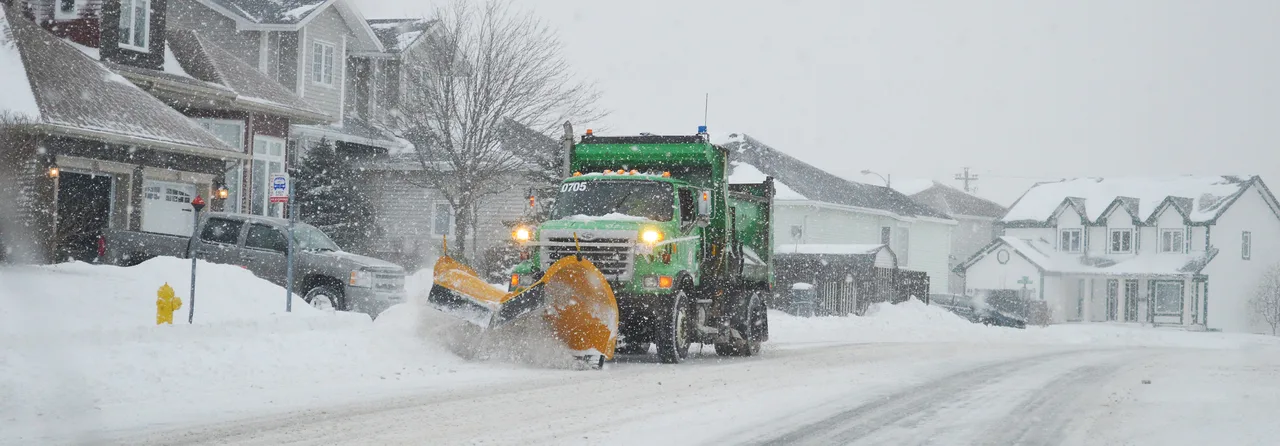
A clear road is only half a journey
For someone driving, a cleared street can look like winter returning to normal. For the person beside it, the same morning may involve a pavement buried under the road’s former contents. Snow clearing is experienced very differently from a steering wheel and a pair of boots.
That difference matters in St. John’s, where winter journeys include school runs on foot, bus stops, shift changes and ordinary shopping. A sidewalk is useful because it connects places. Clear sections at both ends do not help much if the middle requires stepping into traffic or climbing a bank.
The city’s Weather Hub describes a substantial operation: more than 1,400 lane kilometres of road and 193 kilometres of sidewalk during a snow event. The scale explains why priorities exist. It does not make a missing pedestrian connection feel any less important to the person who needs it.
Source: City of St. John’s: weather hub and snow-clearing service levels
Source: Residents debate sidewalk snow clearing before winter, October 2026
What the sidewalk programme actually promises
School zones receive the highest sidewalk priority, followed by high-traffic areas. The published target for most streets in the sidewalk programme is within five days of the end of a winter event. Heavy snowfall above 25 centimetres, blizzard conditions and rapidly changing weather can require extra time.
The two phrases worth noticing are ‘in the programme’ and ‘from the end’. This is not a commitment to clear every sidewalk in the city immediately, nor a countdown that starts with the first flake. Use the city’s sidewalk-priority map to find the route you depend on rather than borrowing an expectation from a different neighbourhood.
Map the whole walk: home to the stop, the crossing, the connection to the destination. If an important gap is outside the designated route, that is a service-coverage question. If it is on the route and remains blocked beyond the target, that is a different question. Being precise makes the problem easier to describe and harder to lose in a general argument about winter.
Source: City of St. John’s: weather hub and snow-clearing service levels
Source: City of St. John’s: sidewalk priority map and plow tracker
The awkward part is the space between responsibilities
A bus trip begins before boarding. The city clears stops along its designated sidewalk routes, while Metrobus clears shelters. A clear shelter with a blocked approach can therefore remain frustratingly difficult to use. For a current shelter concern, the Weather Hub directs passengers to Metrobus on 709-570-2020.
Not every road belongs to the same operation either. Provincial highways and ramps have a separate responsibility, and Memorial maintains named streets around its campus and the Health Sciences Centre. Report the exact location and problem so the enquiry can reach the right team, instead of assuming a municipal plow can resolve every bank in the area.
There is a part residents and private contractors can control: do not push cleared snow onto public sidewalks. Moving a driveway problem onto the pedestrian route does not remove it. It simply gives it a new owner who may have considerably less equipment.
Source: City of St. John’s: weather hub and snow-clearing service levels
Better walking and respect for crews belong together
Residents calling for improvements have raised the difficulty of winter access and the value of safer walking. Others worry about what additional service costs and how that reaches household budgets. Both concerns deserve an answer. It is possible to want better routes while asking clearly what staffing, equipment and money would be needed.
Workers are also people living through the same weather. A local plow operator’s account of working Christmas 2025 described missing their daughter’s present-opening and sometimes helping emergency responders reach a call. That individual account does not establish every operational decision, but it is a useful reminder that the person inside a machine did not personally design the city’s priorities.
Judge the service, ask for better information and describe failures without turning a crew member into the entire policy. Equally, gratitude to workers should not end discussion about an inaccessible sidewalk. A thank-you and a request for a better route can fit in the same sentence.
Source: Residents debate sidewalk snow clearing before winter, October 2026
Source: A plow operator describes working Christmas, December 2025
Get a useful answer about your route
For a hazard, contact Access St. John’s promptly through 311 or 709-754-CITY. For a routine clearing enquiry, the city asks people to allow the stated delivery timeline. Give the street, nearest address or intersection, which side is blocked and how it affects passage. Those details are more useful than reporting that an entire neighbourhood is bad.
The plow tracker can add context, although the city cautions that brief gaps on the display do not mean work has stopped. It is an information tool, not a reason to approach working machinery. Keep space for operators to see and manoeuvre.
Before a storm, learn your route’s priority and identify any realistic alternative you can use. If there is no safe connection, say so when raising the problem. Winter walking should not depend on being an unusually agile pedestrian with nowhere urgent to be.
Source: City of St. John’s: weather hub and snow-clearing service levels
Source: City of St. John’s: sidewalk priority map and plow tracker
Source: Residents debate sidewalk snow clearing before winter, October 2026
Questions people ask
Does St. John’s clear all sidewalks?
No blanket promise applies. Check the city’s designated sidewalk-priority map.
Source: City of St. John’s: sidewalk priority map and plow tracker
Which sidewalks have the highest snow-clearing priority?
School zones, followed by high-traffic areas.
Source: City of St. John’s: weather hub and snow-clearing service levels
How long can sidewalk snow clearing take?
Most streets in the programme have a target within five days after an event ends; severe conditions can extend it.
Source: City of St. John’s: weather hub and snow-clearing service levels
Does the target start when snow begins falling?
No. The city measures it after the winter event ends.
Source: City of St. John’s: weather hub and snow-clearing service levels
Who clears snow from bus shelters?
Metrobus. The city handles stops along its sidewalk-clearing routes.
Source: City of St. John’s: weather hub and snow-clearing service levels
How do I report a blocked bus shelter?
The Weather Hub lists Metrobus at 709-570-2020 for shelter concerns.
Source: City of St. John’s: weather hub and snow-clearing service levels
How do I report a snow hazard?
Contact Access St. John’s through 311 or 709-754-CITY. Give a precise location.
Source: City of St. John’s: weather hub and snow-clearing service levels
Can I push driveway snow onto the sidewalk?
No. The city asks residents and contractors to keep public sidewalks clear of dumped snow.
Source: City of St. John’s: weather hub and snow-clearing service levels
Does an empty plow-tracker display mean crews have stopped?
Not necessarily. The city warns of brief display gaps.
Source: City of St. John’s: weather hub and snow-clearing service levels
Where can I see my sidewalk’s priority?
Use the sidewalk-priority map linked from the city Weather Hub and maps pages.
Source: City of St. John’s: sidewalk priority map and plow tracker
Something changed? Tell us about a correction.